Playwait project
Latest update on 20 March 2016
Introduction

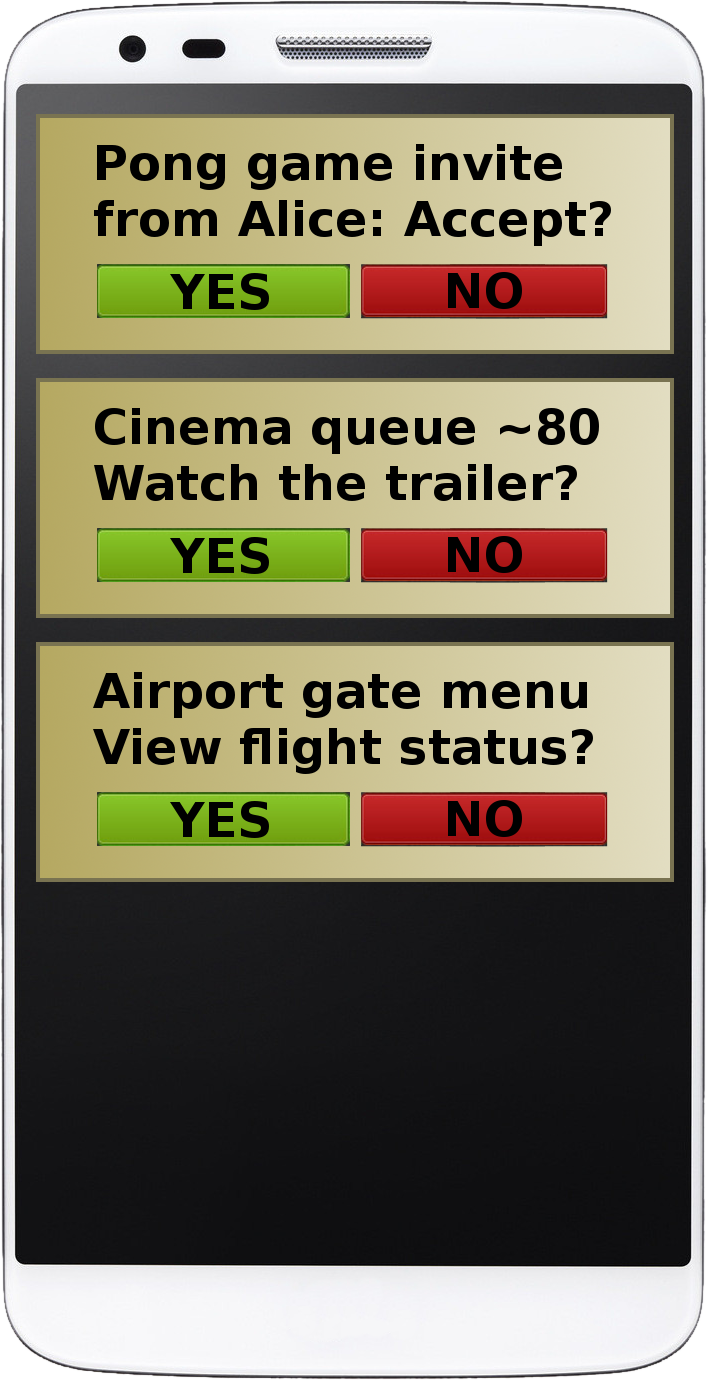
Playwait is the project name for a smart and IoT connected waiting (room|line|list) gamification system including hardware, software, documentation, and support for retail business or similar (like city planners.)
Elevator pitch
- A patron queues up at a waiting situation as usual
- Their mobile device notifies of activities within reach
- The patron can play a game or read a wait forecast
- A neighbor patron joins and they play against each other
- Managers receive real time notifications of patron flows, waiting times, as well as data mined history reports
- The IoT system is designed according to (and extends) a promising Google labs beacon pattern called the Physical Web
- NFC and QR are employed in optional patron self identification allowing for scoreboards, game resuming, survey points, and targetted advertising
- Intuitive features are introduced incrementally to patrons' and managers' existing behavior to minimize interruptions
- Low cost implementation is gained by exploiting the convergence of existing hardware, software, and patron owned equipment
Playwait adds value to public areas, serving customers and employees
Use cases
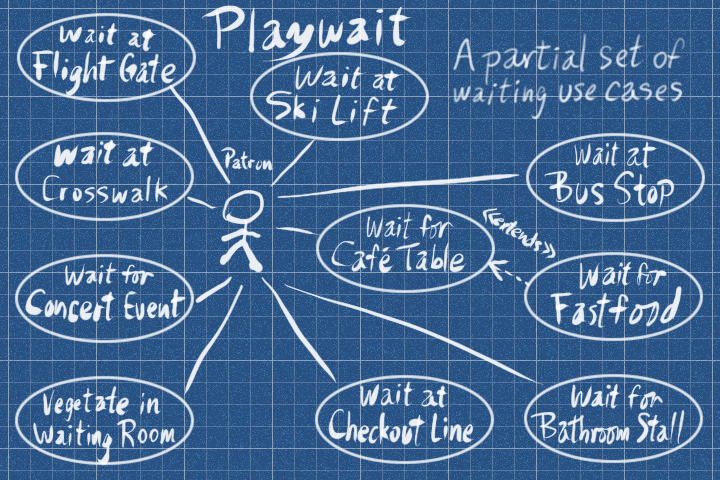

Abbreviated set of actions
Beacon equipped interactions
|
|
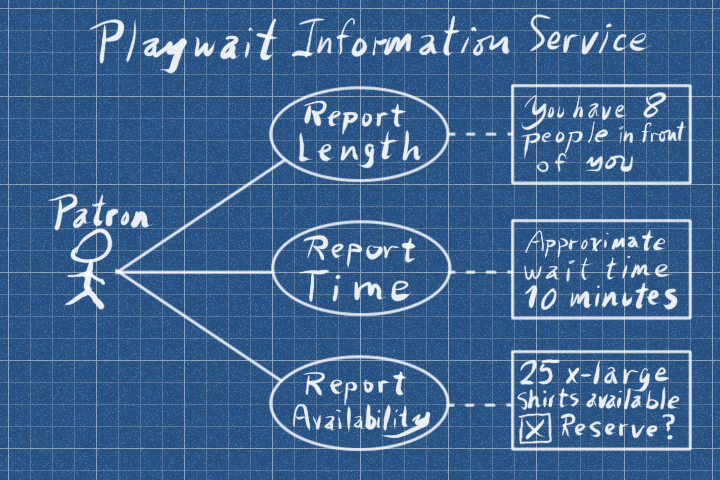
Patron reviewing local information
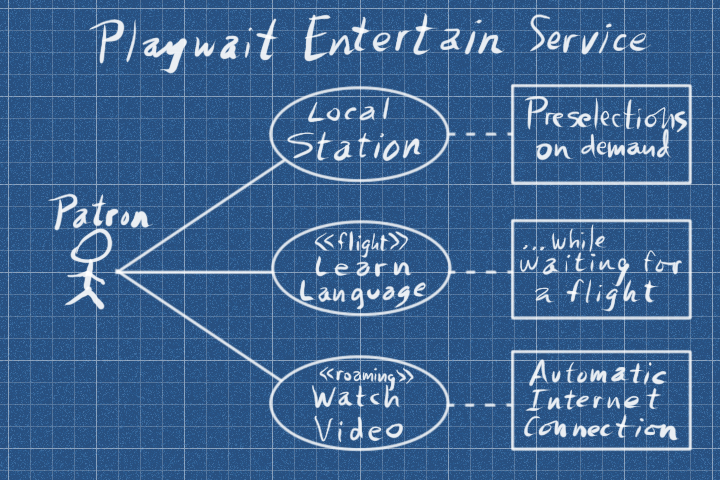
Patron enjoying local entertainment
|
|
Resource notifies patron
Patron is the next one served
|
|
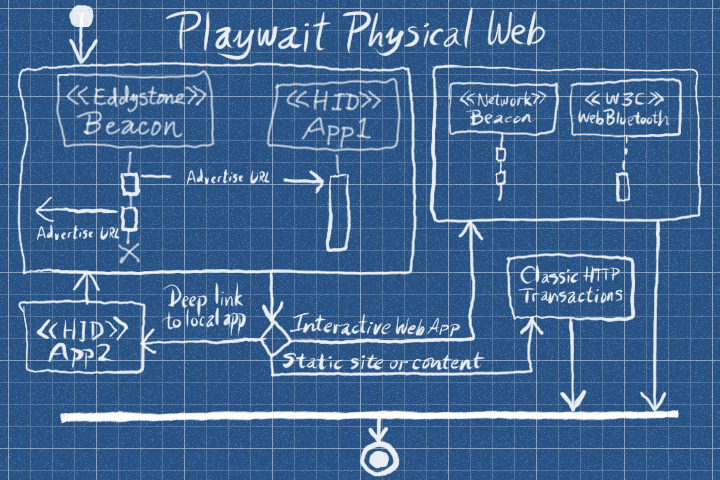
Physical web URL broadcast
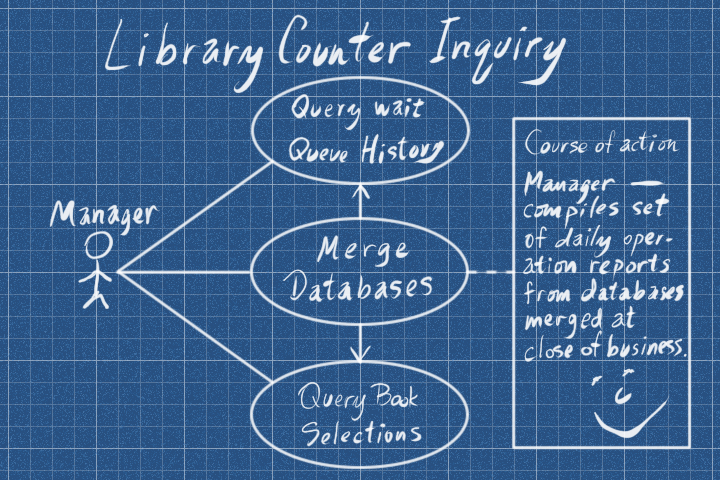
Manager evaluates data
|
|
Original
Playwait is unique, as shown by absence of 'play while waiting gamification' search results. It also has a management interface to allow administrators to mine for data collected over a LPWAN (likely LoRaWAN) network. Consider the case of city planners comparing waiting line history of mens and womens public bathroom stalls.
Inventive
The project integrates Bluetooth and ZigBee communication transports to provide for a seamless proximity based social gaming experience. It employs proven low power IoT messaging protocols (like MQTT) and increases community awareness by introducing neighbors to each other in friendly waiting games.

Industrial
By promoting a pilot system, Playwait will attract attention from market analysts and groups buying infrastructure with added value (like crosswalk smart stoplight sensors.)
|
|
|
Playwait is retail agnostic and can complement civic, airline, clothing, hardware, book, food, garden, textile, pet, or other places where waiting areas or lines are found.
Value added
Classic time passers induce procrastination anxiety affecting both the consumer (who is annoyed by perceived time loss) and provider (who is accountable to expensive displays and data management contracts.) Playwait installs intuitive game systems in existing infrastructure to deliver fun, information, and increase sales.
For example, the checkout lane is the last experience a shopper associates with a store, so a Physical web (IoT) based gamified system and offering the consumer an enjoyable and informative experience can increase customer loyalty and sales.

Educational
Playwait is a potential student challenge at educational events and hackathons. Rapid prototypes and live demonstrations inspire and motivate conference delegates.
Biweekly progress reports and construction advice will be published in two or more online locations. A full length article will be published by a renowned publisher. The project plan is designed to benefit and add value to the community of IoT developers and their understanding of how connected devices can work toegether.
Project plan
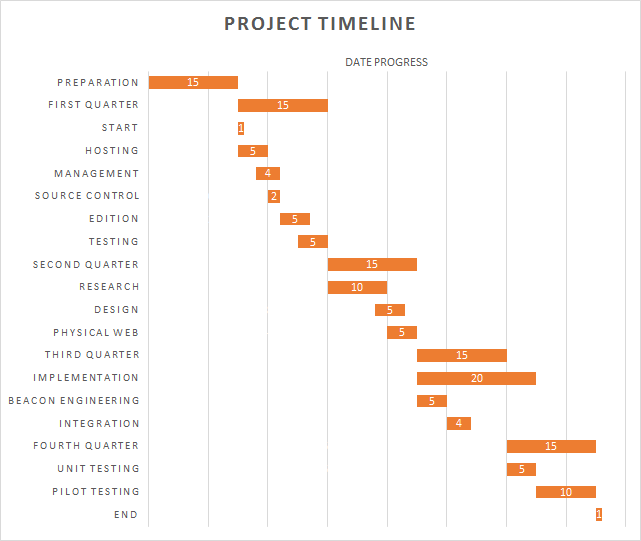
Timeline
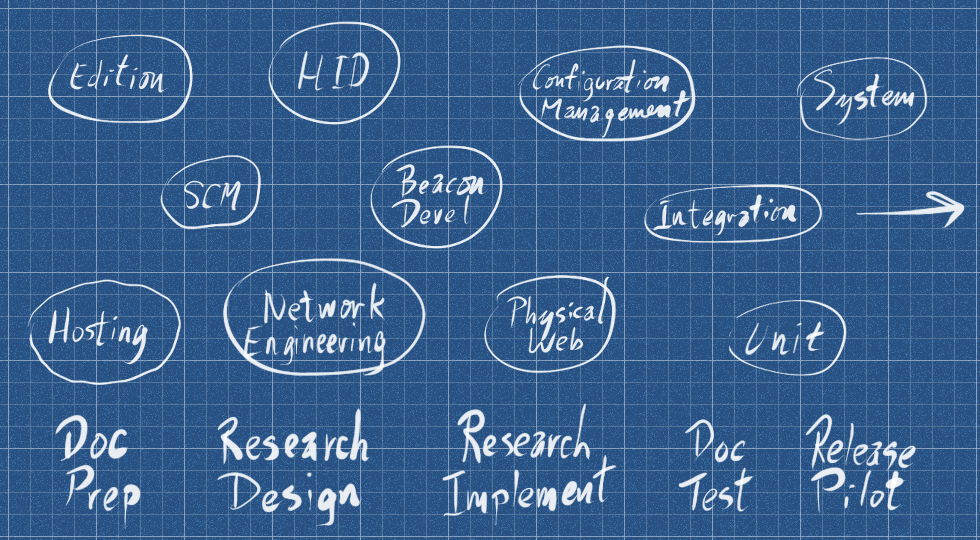
Dependencies
The project plan includes a timeline estimate and release roadmap.
Design doc
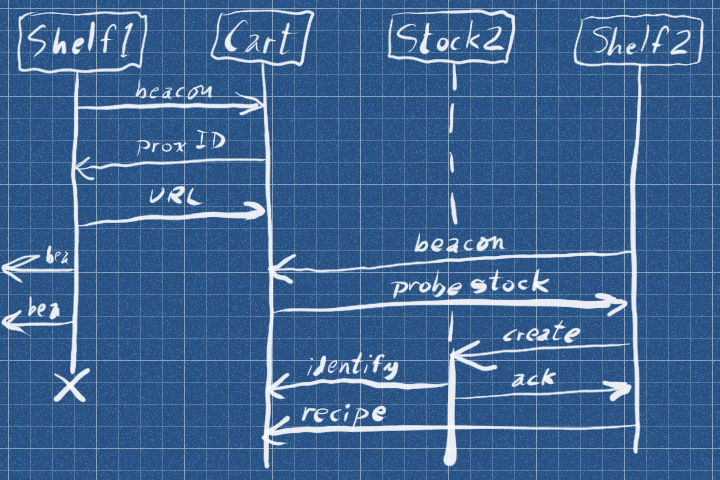
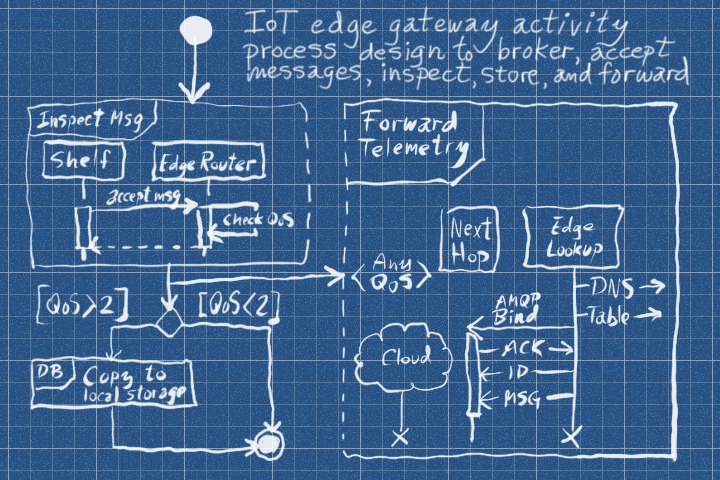
Mobile and beacon discovery
Edge evaluated telemetry data
The preliminary design includes a set of UML diagrams to be published in a general detailed design document located in the online archives.
Work flows
Implementing a Edison beacon
Implementing a nRF52 beacon
Many software components rely on Node.js which is hand coded with custom package.json files at times. The MRAA and UPM libraries provide high level support for sensor platforms, and the Intel XDK is used for developing shelf bound IoT devices or when constructing user interfaces for H2M communication with the system. Apache Cordova provides a abstraction layer for those human user interfaces. Lastly, the Intel System Studio for Microcontrollers integrates Eclipse to provide an IDE for Intel Quark D2000 and SE equipped devices.
Deployment
A hardware bill of materials is provided, and software can be freely downloaded from the project fileserver. Documentation for testers, system administrators, service technicians, managers, and users is available in the online archives. Staff carries out production deployment on a case by case basis to allow for custom configurations.
Pilot launch
In the last week of development, a first stage pilot launch serves as a proof of concept. A forced waiting event is simulated in a limited scale prototype arrangement with a gateway connected six beacon building matrix.
A second stage pilot launch improves granularity (more beacons), incorporates networks, includes forecasts, gender detection, and advertising. It concludes the project and depends on cooperation from the local commercial community.
Materials
Management device
- 1 Dell Edge 5000 (#1001)
- Beacon appliances (#1002)
- …or Edison devices (#1003)
- …or nRF52 devices (#1004)
Energy source
- Solar battery charger (#1101)
H2M device
- 1 Dell Venue 8 Pro 5000 tablet (#1201)
- 1 QR code reading smartphone (#1202)
The bill of materials accomodates one test scenario which is scalable to waiting spaces of any practical size. Playwait is an inexpensive productivity enhancement to existing infrastructure.
Authors
The project is led by Michael Schloh von Bennewitz and staffed by two engineers.
Funding
The project is self funded and hosted by Europalab Networks. We are interested in working with other groups, and will enter the project in calls to bid. A business plan is available to investors considering funding the project.
Licenses
Playwait is licensed under the GNU Public License version 3, and contains Embedded CACert Root Certificates. For more information please read the CACert root distribution license. Components of Playwait contain software from other projects which are accordingly sublicensed.